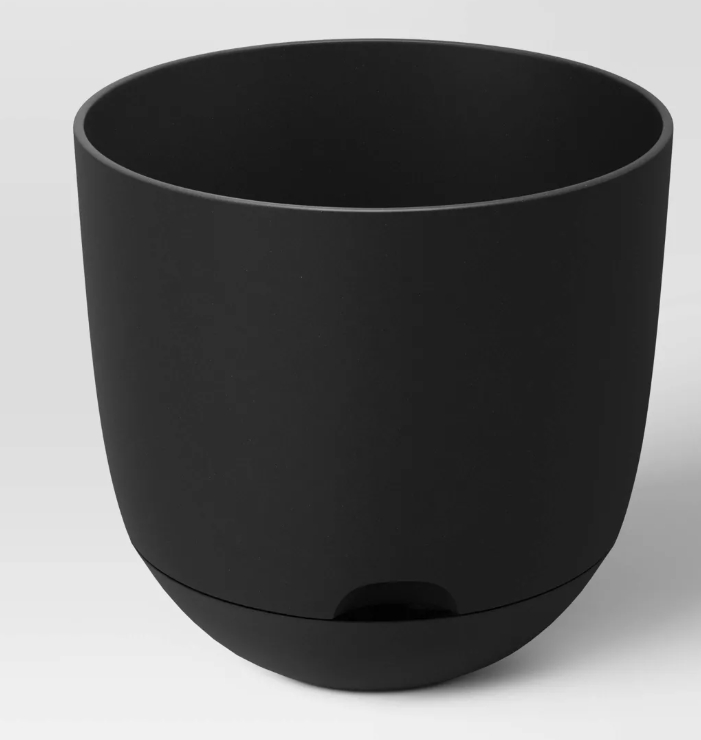
Self-Watering Plastic Indoor Outdoor Planter Pot – Room Essentials™
- Round solid color planter brings functional style to your patio or garden
- Self-watering design allows for hassle-free maintenance and easy care
- Free-standing construction provides versatile styling, perfect for patios and entryways alike
- Has a built-in tray to retain water and a small port for easy watering with a hose or a narrow-spout watering can
Affordable Innovation Meets Modern Plant Care in Target’s Game-Changing Gardening Solution
In the ever-evolving world of home gardening, where busy lifestyles collide with our innate desire to nurture green spaces, innovation has become the bridge between aspiration and reality. Enter the Room Essentials Self Watering Planter – a revolutionary solution that’s transforming how we approach indoor and outdoor plant care. This isn’t just another planter; it’s a testament to how thoughtful design can democratize successful gardening for everyone, regardless of experience level or schedule constraints.
The modern gardener faces a unique set of challenges. We live in an era where our love for plants often conflicts with demanding work schedules, frequent travel, and the steep learning curve that traditional gardening requires. Too many beautiful plants have met their demise not from lack of love, but from inconsistent watering – either too much, too little, or at the wrong times. The Room Essentials Self Watering Planter emerges as a beacon of hope in this landscape, offering a sophisticated yet accessible solution that bridges the gap between our gardening ambitions and real-world constraints.
What makes this particular planter stand out in a crowded market isn’t just its innovative self-watering mechanism, but the philosophy behind its creation. Room Essentials, Target’s signature home brand, has built its reputation on making quality home solutions accessible to everyone. When they turned their attention to gardening, they didn’t just create another planter – they engineered a system that would allow anyone to experience the joy of successful plant parenthood without the traditional pitfalls that often discourage beginners and frustrate experienced gardeners alike.
The Science Behind Self-Watering Excellence
Understanding how the Room Essentials Self Watering Planter works requires appreciating the elegant simplicity of its design. At its core, this system operates on the principle of capillary action – the same natural phenomenon that allows trees to draw water from their roots to their highest branches. The planter features a ingenious dual-chamber system where the main growing area sits above a water reservoir, connected by a wicking system that draws moisture upward as needed.
The magic happens in the details. The planter’s interior design includes a water level indicator that takes the guesswork out of maintenance, allowing you to monitor the reservoir without disturbing your plants. The wicking mechanism consists of specially designed channels or rope-like materials that maintain constant contact between the water supply and the soil, ensuring your plants receive consistent moisture without the risk of waterlogged roots that can lead to rot and other problems.
This system is particularly brilliant because it responds to your plants’ actual needs rather than operating on a predetermined schedule. When the soil begins to dry out, it naturally draws more water through the wicking system. During periods of high humidity or when plants are dormant, less water is drawn up, preventing the overwatering that kills more houseplants than any other factor. It’s like having a intelligent irrigation system built right into your planter, constantly monitoring and adjusting to provide optimal growing conditions.
The Room Essentials Self Watering Planter incorporates overflow protection through carefully calculated chamber sizes and drainage systems. Even if you accidentally overfill the reservoir, excess water has somewhere to go, protecting both your plants and your furniture. This feature makes the planter particularly suitable for indoor use, where water damage to surfaces is a constant concern for traditional plant containers.
Materials and Construction: Built for Real Life
When examining what materials are used in the Room Essentials Self Watering Planter, you’ll discover a thoughtful balance between durability, aesthetics, and affordability. The primary construction utilizes high-quality polypropylene plastic, chosen specifically for its resistance to UV radiation, temperature fluctuations, and the chemical interactions that can occur in soil environments. This isn’t the brittle, easily cracked plastic you might find in cheaper alternatives – it’s a robust material designed to withstand years of use both indoors and outdoors.
The UV-resistant properties of the plastic are particularly important for outdoor applications. Unlike planters made from inferior materials that fade, crack, or become brittle after exposure to sunlight, the Room Essentials Self Watering Planter maintains its structural integrity and appearance even after prolonged sun exposure. This durability extends the life of your investment significantly, making it a smart choice for gardeners who plan to use their planters in various lighting conditions.
The interior components, including the water reservoir and wicking system, are crafted from materials that won’t degrade when in constant contact with water and soil. The wicking elements are designed to resist clogging from mineral deposits that can build up over time, especially in areas with hard water. This attention to long-term functionality means your planter will continue to perform effectively years after purchase, rather than gradually declining in efficiency as cheaper systems often do.
From an environmental perspective, the materials chosen for the Room Essentials Self Watering Planter reflect growing consumer awareness about sustainability. While the plastic construction might initially seem less eco-friendly than alternatives like ceramic or terracotta, the durability factor actually creates a more sustainable solution. A planter that lasts for many years reduces replacement frequency, ultimately generating less waste than multiple shorter-lived alternatives.
The BPA-free construction ensures that no harmful chemicals leach into the soil or water, making these planters safe for growing edible plants like herbs and vegetables. This consideration for food safety demonstrates the comprehensive thinking that went into the design process, anticipating the various ways customers might use their planters.
Design Aesthetics and Practical Considerations
The Room Essentials Self Watering Planter doesn’t sacrifice style for functionality – in fact, it elevates both. Available in a carefully curated range of colors and designs, these planters are designed to complement modern home décor while maintaining the clean, uncluttered aesthetic that contemporary homeowners prefer. The color palette typically includes classic neutral tones like white, black, and gray, along with earth tones that harmonize naturally with plant colors and various interior design schemes.
The design philosophy behind these planters embraces minimalism without being stark or clinical. The clean lines and smooth surfaces create a contemporary look that works equally well in a modern urban apartment, a traditional suburban home, or a rustic country setting. This versatility is intentional – Room Essentials recognizes that their customers have diverse living situations and design preferences, and they’ve created planters that adapt to rather than dictate décor choices.
Size options for the Room Essentials Self Watering Planter range from compact desktop versions perfect for herbs or small succulents, to larger floor-standing models capable of supporting substantial plants like fiddle leaf figs or monstera deliciosas. The smallest planters typically measure around 4-6 inches in diameter, ideal for windowsill gardens or office spaces. Medium sizes usually fall in the 8-12 inch range, perfect for most houseplants and small outdoor arrangements. The largest options can extend to 16 inches or more, providing space for dramatic statement plants or multiple plantings.
Each size maintains the same proportional water reservoir capacity, ensuring that regardless of which size you choose, you’ll get the same effective self-watering performance. This consistency across the product line means you can mix and match sizes throughout your home while maintaining visual cohesion and knowing that all your planters will perform similarly.
The lightweight nature of the plastic construction makes these planters surprisingly portable despite their robust appearance. This portability is particularly valuable for apartment dwellers who might need to move plants to optimize lighting conditions, or for gardeners who like to rearrange their spaces seasonally. Unlike heavy ceramic or concrete planters that become permanent fixtures once positioned, the Room Essentials Self Watering Planter gives you the flexibility to experiment with placement and design arrangements.
Performance and Plant Compatibility
One of the most impressive aspects of the Room Essentials Self Watering Planter is its versatility across different plant types. While no single planter can be perfect for every plant species, these planters excel with the vast majority of common houseplants and many outdoor varieties. The consistent moisture levels they provide make them particularly suitable for plants that prefer even soil moisture, such as pothos, peace lilies, spider plants, and most tropical houseplants.
For herbs and edible plants, the Room Essentials Self Watering Planter offers significant advantages. Herbs like basil, parsley, and cilantro thrive with the consistent moisture these planters provide, often producing more abundant and flavorful harvests than plants grown in traditional containers. The reduced stress from inconsistent watering allows these plants to focus energy on growth and essential oil production rather than survival.
Flowering plants also respond exceptionally well to self-watering systems. Impatiens, begonias, and petunias – notorious for their thirst and sensitivity to watering inconsistencies – flourish in these planters. The steady moisture supply supports continuous blooming and reduces the shock that can occur when plants experience dramatic wet-dry cycles.
However, it’s important to understand the limitations. Plants that prefer dry conditions between waterings, such as most cacti and some succulents, may not be ideal candidates for self-watering systems. These plants have evolved to store water and often suffer when provided with constant moisture. For these specimens, traditional planters with excellent drainage remain the better choice.
The Room Essentials Self Watering Planter performs exceptionally well with young plants and seedlings, which are particularly vulnerable to watering inconsistencies. The gentle, consistent moisture supply eliminates the shock that can stunt or kill developing plants, making these planters excellent choices for starting gardens from seed or nurturing newly purchased plants through their establishment period.
Maintenance and Long-Term Care
Understanding the maintenance requirements of your Room Essentials Self Watering Planter is crucial for maximizing its performance and longevity. Unlike traditional planters that require daily attention during growing seasons, these systems can often go weeks between reservoir refills, depending on plant size, environmental conditions, and seasonal growth patterns.
The frequency of refilling depends on several factors. During active growing seasons (spring and summer), when plants are photosynthesizing vigorously and transpiring more water, you might need to refill the reservoir every 1-2 weeks for larger plants, or every 2-3 weeks for smaller ones. During dormant periods (fall and winter), many plants reduce their water consumption dramatically, and reservoirs might last a month or more between refills.
Environmental conditions play a significant role in water consumption rates. Low humidity, high temperatures, and bright light all increase water usage, while cool, humid conditions slow consumption. Air conditioning and heating systems can dramatically affect these rates, so you’ll need to monitor your plants more closely when seasonal climate control systems are active.
Cleaning your Room Essentials Self Watering Planter is straightforward but important for preventing algae growth and mineral buildup. Monthly cleaning of the reservoir with a mild bleach solution (one part bleach to ten parts water) helps prevent bacterial and algae growth that can clog the wicking system. The exterior cleans easily with standard household cleaners, and the smooth surfaces resist staining from soil or water marks.
Over time, you may notice white mineral deposits building up in the reservoir or on the wicking system, especially if you use tap water with high mineral content. These deposits are normal but can be minimized by using distilled or filtered water, particularly in areas with very hard water. If deposits do accumulate, they can usually be removed with a vinegar solution and gentle scrubbing.
The wicking system itself requires minimal maintenance but should be inspected periodically to ensure it remains in contact with both the water reservoir and the soil. Over time, soil settling or root growth might displace the wicking elements, reducing system efficiency. This is easily corrected by gently repositioning the wick or adding additional wicking material if needed.
Cost Analysis and Value Proposition
When evaluating the cost of a Room Essentials Self Watering Planter, it’s essential to consider both the initial investment and the long-term value proposition. These planters typically retail for significantly less than premium self-watering systems while offering many of the same benefits. Prices generally range from around $8-15 for smaller planters to $25-40 for larger sizes, positioning them as an accessible entry point into self-watering technology.
Comparing this investment to the cost of replacing plants that die from watering inconsistencies reveals the true value proposition. A single mature houseplant can easily cost $20-50 or more, and many plant parents find themselves replacing the same species multiple times as they struggle with watering schedules. The Room Essentials Self Watering Planter can pay for itself by saving just one or two plants from watering-related death.
The time savings represent another significant value component. For busy professionals, parents, or frequent travelers, the reduced watering frequency can save hours of weekly maintenance time while actually improving plant health outcomes. This time value becomes particularly apparent when managing multiple plants – a collection that might require daily attention in traditional planters can often be maintained with weekly check-ins when using self-watering systems.
Water conservation also contributes to long-term savings. The efficient wicking system eliminates runoff and reduces overall water consumption compared to traditional watering methods. While individual savings might be modest, they accumulate over time, particularly for households maintaining numerous plants.
The durability of these planters extends their value proposition significantly. While cheaper alternatives might need replacement after a season or two of outdoor use, the UV-resistant construction and quality materials of the Room Essentials Self Watering Planter support multi-year use even in challenging conditions.
Shopping and Availability
The Room Essentials Self Watering Planter is primarily available through Target stores and Target’s online platform, reflecting the brand’s exclusive relationship with the retailer. This exclusive distribution model has both advantages and limitations for consumers. On the positive side, it ensures consistent pricing, availability, and customer service standards across all purchase channels. Target’s robust logistics network means these planters are generally well-stocked and available for both in-store pickup and home delivery.
Target’s seasonal merchandising strategy means that the full range of sizes and colors is typically most readily available during peak gardening seasons – late winter through early summer. During off-seasons, selection might be more limited, though basic sizes and colors usually remain in stock year-round. Planning ahead for seasonal gardening projects can help ensure you get your preferred sizes and colors.
The online shopping experience offers the advantage of seeing the complete product line and reading customer reviews, which can be invaluable for first-time buyers trying to select appropriate sizes for their plants and spaces. Target’s website typically includes detailed product specifications, care instructions, and customer photos that show the planters in real-world settings.
In-store shopping allows you to physically examine the planters, assess their size relative to your plants or intended spaces, and often take advantage of seasonal promotions or clearance pricing. Target frequently runs promotions on home and garden items, particularly during seasonal transitions, making it possible to acquire these planters at significant discounts.
For customers outside Target’s primary markets, availability might be more limited, though Target’s expanding online shipping coverage has improved access significantly. Third-party sellers occasionally offer these planters through other channels, but purchasing directly from Target ensures authentic products and full warranty coverage.
Comparative Analysis and Market Position
Understanding how the Room Essentials Self Watering Planter compares to other budget-friendly options helps clarify its market position and value proposition. In the self-watering planter category, competitors range from DIY solutions costing under $5 to premium systems exceeding $100. Room Essentials occupies a sweet spot in this spectrum, offering engineered reliability at accessible pricing.
Compared to DIY self-watering systems using plastic bottles or basic containers, the Room Essentials Self Watering Planter offers superior aesthetics, more reliable performance, and better long-term durability. While DIY solutions might cost less initially, they often require ongoing adjustments and replacements that can make them more expensive over time.
Against other budget-oriented brands, Room Essentials typically offers better UV resistance, more attractive designs, and more consistent quality control. Many competing budget planters use thinner plastics that become brittle quickly or wicking systems that clog easily, leading to system failures within a season or two.
Premium self-watering systems often offer features like smart monitoring, app connectivity, or more sophisticated water delivery mechanisms. However, for most home gardeners, these advanced features don’t justify the 3-5x price premium, especially when the basic function – providing consistent plant moisture – is performed equally well by the Room Essentials system.
The brand recognition and customer service backing of Target also provides advantages over unknown or foreign brands that might offer similar products at lower prices but with uncertain quality control or customer support. Target’s generous return policy and widespread store network provide confidence that problems can be resolved quickly and locally.
Environmental Impact and Sustainability
The environmental considerations surrounding the Room Essentials Self Watering Planter reflect broader questions about plastic use, product longevity, and resource efficiency in gardening. While plastic planters inherently have a larger carbon footprint than natural materials like terracotta or wood, the durability and efficiency of these systems can actually result in lower overall environmental impact.
The longevity of these planters is perhaps their most significant environmental advantage. A single high-quality plastic planter that lasts 5-10 years has a much lower environmental impact than multiple shorter-lived alternatives, regardless of material. This durability reduces manufacturing demand, transportation emissions, and waste generation over time.
Water conservation represents another environmental benefit. The efficient wicking system eliminates runoff and reduces overall water consumption compared to traditional watering methods. This efficiency is particularly valuable in drought-prone regions or areas with water restrictions, where every gallon saved contributes to broader conservation efforts.
The improved plant survival rates enabled by consistent watering also have environmental implications. Plants that thrive rather than merely survive provide better air purification, carbon sequestration, and ecosystem services. Additionally, reducing plant mortality means fewer replacement purchases, reducing the environmental impact of commercial plant production and transportation.
End-of-life considerations are important for plastic products. The polypropylene construction of these planters is recyclable in many areas, though local recycling capabilities vary. The long lifespan means that disposal is a distant concern for most users, but when the time comes, responsible recycling options should be explored.
Future Innovations and Industry Trends
The success of products like the Room Essentials Self Watering Planter reflects broader trends in home gardening toward technology integration and user-friendly design. As urban living spaces become smaller and lifestyles busier, demand for low-maintenance gardening solutions continues to grow.
Smart technology integration represents the next frontier in self-watering systems. While current Room Essentials planters operate on passive wicking systems, future iterations might incorporate sensors that monitor soil moisture, light levels, and plant health, sending alerts to smartphone apps when intervention is needed. However, the challenge will be maintaining the simplicity and affordability that make current systems accessible to mainstream consumers.
Sustainability considerations are driving innovation in materials and manufacturing processes. Future versions might incorporate recycled plastics or bio-based materials that maintain durability while reducing environmental impact. Advanced manufacturing techniques could also enable more complex internal geometries that improve water distribution and plant health outcomes.
Modular systems that allow users to expand and customize their growing setups represent another emerging trend. Future Room Essentials planters might incorporate stackable designs, interchangeable reservoirs, or connectivity systems that allow multiple planters to share water sources or monitoring systems.
The growing interest in edible gardening is also influencing design trends. Future iterations might include specialized features for herb and vegetable production, such as integrated growing lights, nutrients delivery systems, or companion planting guides.
Conclusion: Cultivating Success for Every Gardener
The Room Essentials Self Watering Planter represents more than just an innovative gardening product – it’s a democratization of successful plant care that makes thriving gardens accessible to everyone, regardless of experience level, schedule constraints, or gardening knowledge. By solving the fundamental challenge of consistent watering through elegant engineering and thoughtful design, these planters remove the biggest barrier between plant love and plant success.
For the novice gardener intimidated by the complexity of traditional plant care, these planters provide confidence and forgiveness that enable learning and growth. For the experienced gardener juggling busy schedules, they offer reliability and efficiency that maximize results while minimizing time investment. For the frequent traveler, they provide peace of mind that plants will thrive even during extended absences.
The careful balance of functionality, aesthetics, and affordability positions the Room Essentials Self Watering Planter as an exceptional value in the modern gardening landscape. While premium alternatives might offer additional features, and budget options might cost less initially, few products match the combination of reliable performance, attractive design, and accessible pricing that defines this product line.
As we move forward in an era where sustainable living and biophilic design principles guide our home choices, products like the Room Essentials Self Watering Planter become increasingly relevant. They enable us to bring more life into our living spaces while working within the practical constraints of modern life. They prove that innovation doesn’t always require complexity – sometimes the most elegant solutions are also the most simple.
Whether you’re starting your first houseplant collection, expanding an existing garden, or looking for solutions to make plant care more manageable, the Room Essentials Self Watering Planter offers a proven pathway to success. It’s not just about keeping plants alive – it’s about creating the conditions where both plants and plant parents can truly thrive.
In a world where technology often complicates rather than simplifies our lives, these planters remind us that the best innovations are those that quietly and efficiently solve real problems while enhancing our daily experiences. They represent the future of accessible gardening – where success is measured not by expertise or time investment, but by the simple joy of watching plants flourish under our care.